

The best time to visit taj mahal is between October and March, when Agra’s weather is cool, dry, and comfortable for long walks around the marble mausoleum. This guide breaks down the Taj Mahal weather by month, the pros and cons of each season, and practical tips for sunrise visits and crowd management, so you can plan a trip that matches your travel style and tolerance for heat or rain.
If you’re traveling from the USA, UK, Canada, Australia, France, Germany, Singapore, or Malaysia, you’ll want to know exactly what to expect from Agra’s climate month by month. That includes the best season to visit the Taj Mahal, how to avoid the worst crowds, and why a sunrise visit often delivers the most magical light and the fewest people.
Key Takeaways
- The best time to visit Taj Mahal is from October to March, when daytime temperatures stay between 50°F and 85°F and skies are mostly clear.
- November and February offer the most comfortable sightseeing weather, with low humidity and mild mornings that make long walks around the complex pleasant.
- Sunrise is the single best window for photography and smaller crowds, especially from October through March when the marble glows soft pink and gold.
- Summer months from April to June bring intense heat above 100°F, so plan an early morning visit and carry water if you travel then.
- Monsoon months from July to September bring fewer tourists and lush green gardens, but rain can close the main dome viewing area at short notice.
Taj Mahal Weather by Month
We often tell travelers that Agra’s climate shapes the Taj Mahal experience as much as the monument itself. The city sits on the Gangetic plain, so it swings between dry, scorching summers and cool, fog-prone winters. Knowing the Taj Mahal weather by month helps you pack the right layers, plan the right time of day, and avoid the worst of the heat or haze.
Agra has three distinct seasons. From April to June, daytime highs regularly cross 104°F (40°C), and the dry heat can feel relentless by midday. July through September brings the monsoon, with humidity climbing above 80% and short but intense afternoon downpours. October to March is the most comfortable stretch, with clear skies, low humidity, and overnight lows that can dip to 45°F (7°C) in December and January.
| Month | Avg High (°F) | Avg Low (°F) | Rainfall (in) | Humidity |
|---|---|---|---|---|
| January | 72 | 45 | 0.5 | Moderate |
| February | 78 | 50 | 0.6 | Moderate |
| March | 88 | 59 | 0.4 | Low |
| April | 98 | 70 | 0.3 | Low |
| May | 105 | 79 | 0.5 | Low |
| June | 103 | 83 | 2.4 | High |
| July | 93 | 80 | 8.3 | Very high |
| August | 91 | 79 | 9.1 | Very high |
| September | 93 | 77 | 4.7 | High |
| October | 93 | 68 | 0.7 | Moderate |
| November | 84 | 55 | 0.2 | Low |
| December | 75 | 47 | 0.3 | Moderate |
One weather quirk worth planning around is winter fog. From late December through early February, dense morning fog can delay sunrise views and even affect train schedules. If you’re visiting in that window, we suggest booking a slightly later entry time and keeping your itinerary flexible. The payoff is that winter afternoons are glorious, with soft light and temperatures that make walking the gardens a pleasure rather than an endurance test.
Best Season to Visit the Taj Mahal
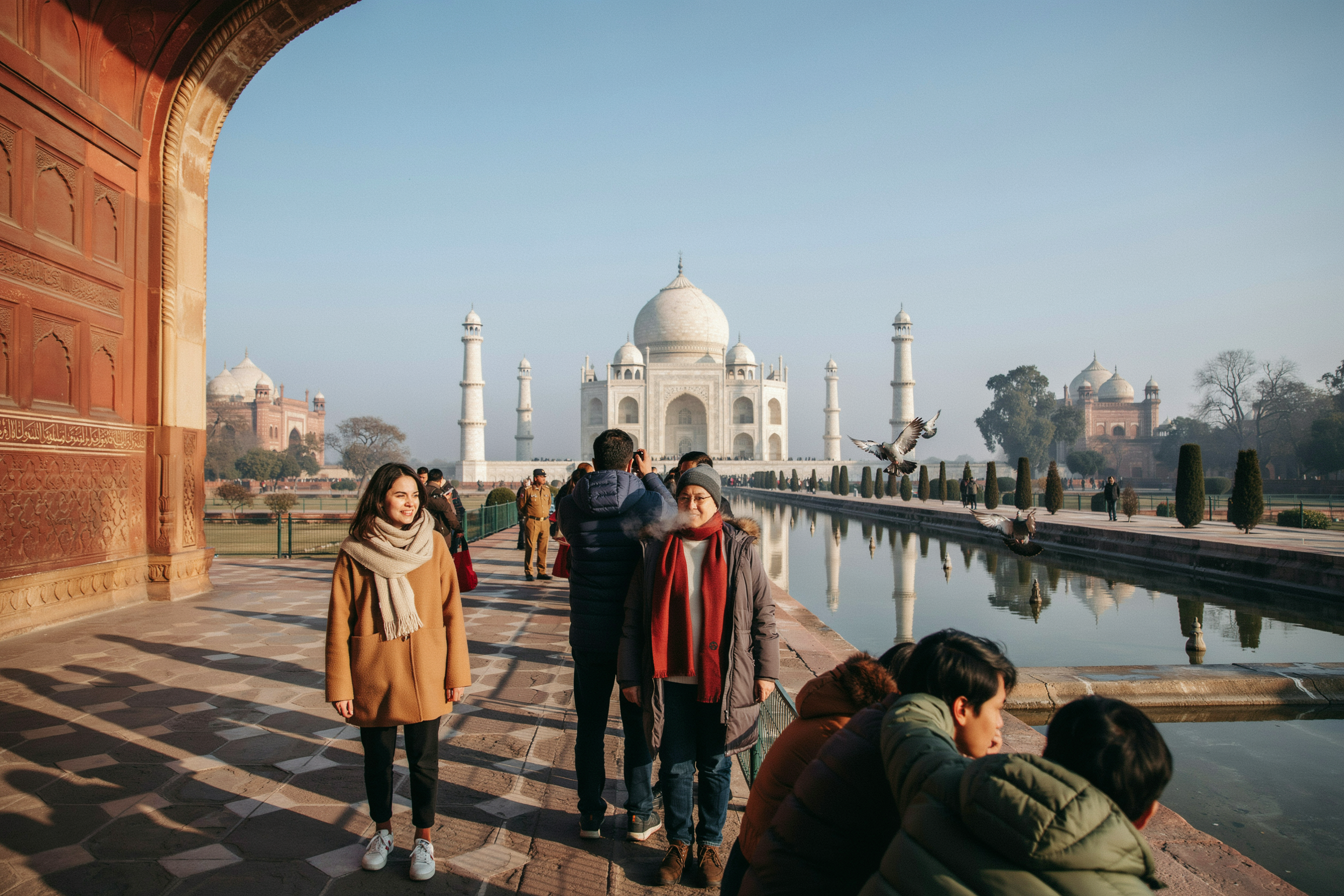
When travelers ask us about the best time to visit Taj Mahal, we always point to the stretch from October through March. This window is what locals and repeat visitors call the Agra best season, and it earns that title for good reason. Daytime temperatures settle between 70°F and 85°F (21°C to 29°C), the humidity drops, and the sky tends to stay clear. You can walk the marble platform barefoot without flinching, linger over the inlay work for as long as you like, and still have energy for Agra Fort in the afternoon.
October and November are our favorite months for first-time visitors. The post-monsoon air is washed clean, the Yamuna River has enough water to reflect the dome, and the gardens are green again. December and January bring the coolest mornings, which makes a sunrise visit genuinely comfortable. February and March warm up gradually, and the crowds thin out after the New Year rush. If you want the classic postcard photo with soft light and fewer people in the frame, aim for a weekday in late February or early March.
One practical note: this is also peak tourist season, so hotel rates in Agra climb and the ticket lines get longer. We recommend booking your entry slot at least two weeks ahead during this window. The trade-off is worth it. You get the monument at its most photogenic, the weather at its most forgiving, and the city at its most alive. That combination is exactly why October to March remains the answer when anyone asks us about the best time to visit Taj Mahal.
Summer Months: April to June
Summer in Agra is not for the faint of heart. From April through June, daytime temperatures routinely climb past 104°F (40°C), and by late May the heat can feel relentless. The Taj Mahal’s white marble radiates that heat back at you, so a midday visit often feels like standing inside an oven. If your travel dates fall in this window, the best time to visit taj mahal is right at opening, around 6:00 a.m. when the air is still bearable and the crowds are thin.
One silver lining: summer is the low season for tourism. You won’t fight the shoulder-to-shoulder crowds that define winter months, and hotel rates in Agra drop noticeably. That said, Taj Mahal crowd tips for summer still apply: arrive before 7:00 a.m., buy tickets online in advance, and head straight to the main mausoleum before tour groups assemble. By 10:00 a.m. the sun is already punishing, and most sensible visitors are leaving.
Practical advice for surviving a summer visit: carry at least a liter of water per person, wear loose cotton clothing that covers your shoulders and knees, and bring a wide-brimmed hat or umbrella. The ASI allows small water bottles inside the complex, and you’ll be glad for every sip. Avoid the marble platform barefoot after 9:00 a.m.; the stone gets hot enough to burn skin. If you can, schedule your visit for a weekday, when domestic tourist numbers dip slightly.
We also recommend pairing an early Taj Mahal visit with an air-conditioned break at Agra Fort or a late lunch at a nearby heritage hotel. The heat is manageable if you plan around it, but don’t underestimate it. Summer is survivable, even rewarding for budget travelers, as long as you treat the sun as the main obstacle and plan your day around the coolest hours.
Monsoon Months: July to September
The monsoon reaches Agra in early July and lingers through September, bringing heavy downpours that transform the Yamuna River and the gardens around the mausoleum. We find that the Taj Mahal weather by month during this stretch is humid, with daytime highs around 90°F (32°C) and frequent afternoon showers. The rain often arrives in short, intense bursts, so you can still explore between cloudbursts if you carry a compact umbrella and wear quick-dry clothing.
Visiting in the monsoon has real trade-offs. On the plus side, the crowds thin out dramatically, and the white marble takes on a soft, misty glow that photographers love. The downside is that the sky rarely clears completely, and the famous reflection pool may be choppy from wind and rain. We also see occasional flooding on the access roads, which can delay your arrival. If you’re weighing the best time to visit taj mahal, the monsoon is not the obvious choice, but it rewards travelers who prioritize solitude over postcard-perfect skies.
One practical tip: check the forecast the night before and aim for a mid-morning slot, when the heaviest overnight rain has usually passed. The complex stays open during light rain, and the covered walkways near the main gate offer shelter. We recommend packing a rain jacket, waterproof shoes, and a ziplock bag for your phone and tickets. The gardens look especially lush in August, and the cooler air makes walking the marble platform more comfortable than in the summer heat.
Winter Months: October to March
From October through March, Agra settles into the kind of weather that makes you want to linger outdoors. Daytime highs hover between 70°F and 85°F (21°C to 29°C), while nights dip into the 50s°F (10°C to 15°C). The air is dry, the sky is often a clean blue, and the marble of the Taj Mahal stays cool enough to touch. This is the best time to visit Taj Mahal for most travelers, and the crowds prove it.
October and November are the shoulder months, when the post-monsoon greenery still softens the gardens and the heat has finally broken. By December, the peak season is in full swing. Mornings can be foggy, which occasionally delays the classic sunrise view, but the mist also gives the monument a dreamlike quality that photographers love. January is the coldest month, with early mornings near 45°F (7°C), so a light jacket is smart if you plan to be at the gates before dawn.
Festivals add another layer of appeal. Diwali, usually in October or November, fills the city with lights and energy. In February, the Taj Mahotsav festival brings crafts, music, and food to Shilpgram, just a short drive from the monument. March sees Holi, the festival of colors, which is a spectacular time to be in India, though the Taj itself stays protected from the powders on the main day.
Because this is the most popular season, ticket lines are longest and hotels book out weeks ahead. The best time to visit taj mahal during these months is a weekday morning, ideally Tuesday through Thursday, when domestic tourist numbers dip. If your schedule allows, aim for late February or early March: the weather is still mild, the fog has cleared, and the crowds are slightly thinner than in December and January.
For a quieter experience, consider arriving at the East Gate about 30 minutes before opening. You’ll share the sunrise with fewer people than at the West Gate, and the soft winter light on the marble is worth the early alarm.
Taj Mahal Sunrise Visit
Sunrise is the single most magical moment to stand before the Taj Mahal, and it’s also the coolest, quietest part of the day in Agra. The gates open about 30 minutes before the sun comes up, and the early light shifts the marble from soft gray to pale pink to warm gold within the span of twenty minutes. Photographers get the cleanest shots at this hour because the air is still clear and the crowds haven’t arrived yet. We recommend arriving at the East Gate by 5:45 a.m. from October through March, when sunrise falls between 6:15 and 7:00 a.m. and closer to 5:30 a.m. in April and September.
Sunrise tickets are sold at the gate on a first-come, first-served basis, and they cost the same as regular entry: 1,100 INR for foreign visitors and 50 INR for Indian nationals, with an additional 200 INR if you want to enter the main mausoleum. There’s no separate sunrise ticket category, so the advantage is purely about timing. Bring cash in small notes, because card machines at the ticket windows are unreliable before 6:00 a.m. Security lines move quickly at sunrise, but backpacks, tripods, and food aren’t allowed inside, so travel light.
What you can expect: a short walk from the gate to the Great Gate, then the famous first view of the Taj framed by the archway. The reflecting pool is calmest before the wind picks up, which makes the classic mirror shot possible. By 8:30 a.m. the sun is higher, the marble is bright white, and the tour buses have arrived, so the peaceful window closes fast. If you’re deciding between sunrise and sunset, sunrise wins for fewer people and softer light.
Taj Mahal Crowd Tips
We have stood inside the main gateway at 6:10 a.m. and watched the courtyard fill within twenty minutes, so we know that timing is everything. The single most effective Taj Mahal crowd tip is to arrive before the gates open, ideally 30 to 45 minutes early, because the first hour after sunrise is dramatically quieter than any other part of the day. Weekday visits, especially Tuesday through Thursday, are noticeably calmer than weekends and public holidays, when domestic tourism spikes and queues at the East and West Gates can stretch for hundreds of yards.
Most travelers enter through the West Gate, which handles the largest share of foot traffic, but the East Gate often opens with shorter lines and is a smart choice if you’re staying near Taj Ganj. The South Gate is restricted to local residents and is not a reliable entry point for visitors. If you’re visiting during peak season from November to February, plan your arrival for a Wednesday or Thursday morning and avoid the days immediately after major Indian festivals, when Agra sees a surge of regional visitors.
Once inside, don’t linger at the first photo platform. Walk directly toward the central water channel and then move to the far sides of the garden, where the crowds thin out and you can still capture the classic reflection view without waiting in line. The area near the mosque on the western flank is often quieter than the main approach, and the riverside terrace behind the mausoleum offers a different perspective with far fewer people. We also recommend buying your ticket online in advance, because the ticket counters are a common bottleneck and pre-booked visitors can move through security faster.
Finally, remember that the Taj Mahal is closed every Friday, so a Friday arrival in Agra means you’ll face larger crowds on Saturday and Sunday as travelers compress their visits. If your itinerary allows, plan your Agra stay for a Monday through Thursday window and pair an early morning visit with a late afternoon return, when the light changes and many tour groups have already departed.
Month-by-Month Guide
Planning around the best time to visit taj mahal becomes much easier when you see how each month actually feels on the ground. We have walked the grounds in every season, and the difference between a January dawn and a June afternoon is dramatic. Here’s what we tell travelers who ask us to break the year down month by month.
January brings crisp mornings that often dip below 45°F (7°C), with afternoon highs near 70°F (21°C). Fog can linger until mid-morning, which softens the sunrise view but clears by noon. Crowds are moderate after New Year, and the low humidity makes long walks comfortable. Bring a warm layer for the early entry.
February is one of the most pleasant months, with clear skies and daytime temperatures in the mid-70s°F (around 24°C). The gardens are green, and the marble stays cool to the touch. Expect steady visitor numbers, especially around Valentine’s Day, so book tickets a few days ahead.
March marks the start of the shoulder season. Temperatures climb into the low 80s°F (27, 29°C), and the haze begins to build. Mornings are still lovely, and the crowds thin slightly after the first week. This is a favorite month for photographers who want good light without peak-season prices.
April turns noticeably warmer, with afternoons reaching 95°F (35°C) or more. The heat is dry rather than humid, but it’s real. We recommend arriving at opening time and leaving by 10 a.m. The upside: shorter lines and more room to frame the classic reflection shot.
May is the hottest month, often exceeding 104°F (40°C). The marble radiates heat by mid-morning, and few travelers stay past noon. If you must visit in May, go at sunrise and carry more water than you think you need. Many local hotels drop their rates sharply.
June brings the first monsoon clouds, but the rain is still sporadic. Temperatures hover near 100°F (38°C), and the humidity climbs. The Taj looks striking under dramatic cloud cover, and the pre-monsoon breeze offers brief relief. Crowds are at their lowest.
July is fully into the monsoon. Expect heavy downpours, often in the afternoon, and lush green gardens. The Yamuna River swells, and the air feels heavy. Rain can close the outdoor walkways briefly, but the monument itself stays open. Pack a compact umbrella and waterproof shoes.
August continues the monsoon pattern, with high humidity and frequent showers. The white marble glows against dark skies, which makes for unusual photos. Visitor numbers remain low, so you can linger without jostling. Check the forecast daily and plan indoor backup activities in Agra.
September sees the rain taper off, leaving behind clean air and refreshed greenery. Temperatures ease back into the low 90s°F (around 33°C). This is a transitional month that many travelers overlook, but it offers a nice balance of fewer crowds and improving weather.
October is the true start of the high season. Skies clear, humidity drops, and daytime highs settle near 88°F (31°C). The gardens are still green from the monsoon, and the light is golden. Expect larger crowds from mid-month onward, especially around Diwali.
November delivers near-perfect conditions: sunny days in the low 80s°F (27°C) and cool nights. The air is dry, and visibility is excellent. This is one of the busiest months, so arrive at opening time and consider a weekday visit. The best time to visit taj mahal for most first-time travelers falls in this window.
December closes the year with cool mornings, foggy dawns, and festive energy around Christmas and New Year. Daytime highs stay near 72°F (22°C), making it very comfortable. Crowds spike in the final week, and hotel prices rise accordingly. A sunrise ticket is worth the early alarm.
Planning Your Trip: Practical Advice
Once you settle on the best time to visit taj mahal, lock in the practical details so your day runs smoothly. The monument opens 30 minutes before sunrise and closes 30 minutes before sunset, every day except Friday, when it’s closed for prayers. Buy your ticket online through the official Archaeological Survey of India portal or at the gate, but online is faster and lets you skip the longest queue. Foreign visitors pay a higher entry fee than Indian nationals, and the ticket includes a bottle of water and shoe covers for the main mausoleum. Plan to arrive at least 45 minutes before sunrise to clear security, because the lines grow quickly even in the quieter months.
Security is strict: large bags, tripods, food, and drones aren’t allowed inside. There’s a free cloakroom near the west gate, but it adds time, so travel light. We recommend carrying only a small crossbody bag, your passport, and a phone. The east and west gates are the main entry points, while the south gate opens later and is best avoided if you want the iconic first-light view. If you’re staying in Agra, book a hotel within a 15-minute drive of the east gate, because early-morning traffic is minimal and you won’t need to wake up as early.
Nearby attractions are easy to combine with your Taj Mahal visit. Agra Fort, just 2.5 kilometers away, is a UNESCO World Heritage site and deserves at least two hours. The tomb of Itimad-ud-Daulah, often called the Baby Taj, sits on the opposite bank of the Yamuna and offers a quieter, more intimate experience. Mehtab Bagh, a garden directly across the river, gives you a sunset view of the Taj Mahal from behind, and it’s far less crowded than the main complex. For a full day, start at the Taj Mahal at sunrise, visit Agra Fort mid-morning, have lunch, then end at Mehtab Bagh for the golden-hour view. This loop works especially well from October to March, when the weather is cool enough to stay outdoors all day.
If you’re traveling from Delhi, the Gatimaan Express train leaves early and reaches Agra in about 100 minutes, making a same-day round trip possible. The best time to visit taj mahal for a day trip is between November and February, when the skies are clear and the heat is mild. Book train tickets at least a week ahead, because morning departures sell out fast during peak season. Carry a light jacket in winter, because the pre-dawn wait at the gate can be chilly, and bring sunscreen and a hat from April onward. Whatever month you choose, a little planning turns a good visit into an unforgettable one.
If you’re planning a longer trip, consider our Golden Triangle tour by car, which pairs the Taj Mahal with Delhi and Jaipur. For more on Agra’s surroundings, our guide to top things to do on a Golden Triangle tour covers the best stops between the three cities. You can also check the official Taj Mahal website for current opening hours and ticket prices.
Frequently Asked Questions
What is the best month to visit the Taj Mahal?
November through February offers the most comfortable weather, with daytime highs in the 70s and low humidity. October and March are also pleasant, though crowds swell around Diwali and Holi. For the best balance of clear skies and thinner crowds, we recommend late October or early November.
What time should I arrive for a Taj Mahal sunrise visit?
Gates open about 30 minutes before sunrise, typically between 6:00 and 6:30 AM. Arrive at the East or West Gate by 5:30 AM to clear security and secure a spot near the reflecting pool. The soft morning light is ideal for photography, and temperatures stay cool for a few hours.
How can I avoid the biggest crowds at the Taj Mahal?
Weekdays are noticeably quieter than weekends, and the first two hours after opening see far fewer visitors. Avoid Indian public holidays and the full moon nights when the monument stays open late. Entering through the East Gate usually means shorter lines than the West Gate, which tour buses favor.
Is the Taj Mahal open every day?
The Taj Mahal is closed every Friday for prayers, so plan your visit on any other day of the week. It also closes for limited hours during major national events. Always check the official Archaeological Survey of India website for the current schedule before you travel.
Can I visit the Taj Mahal during monsoon season?
Yes, and many travelers enjoy the lush gardens and dramatic clouds from July to September. Rain showers are usually brief, and the monument looks striking against a gray sky. Just bring an umbrella and expect higher humidity. If photography is your priority, the best time to visit Taj Mahal remains the dry winter months.

Leave A Comment
You must be logged in to post a comment.